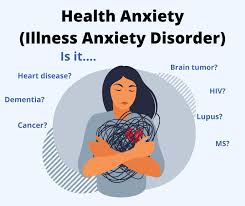

Anxiety is an emotion characterized by an unpleasant state of inner turmoil and includes feelings of dread over anticipated events.[1][2][3] Anxiety is different from fear in that fear is defined as the emotional response to a present threat, whereas anxiety is the anticipation of a future one.[4] It is often accompanied by nervous behavior such as pacing back and forth, somatic complaints, and rumination.[5]
Anxiety is a feeling of uneasiness and worry, usually generalized and unfocused as an overreaction to a situation that is only subjectively seen as menacing.[6] It is often accompanied by muscular tension,[7] restlessness, fatigue, inability to catch one’s breath, tightness in the abdominal region, nausea, and problems in concentration. Anxiety is closely related to fear,[3] which is a response to a real or perceived immediate threat (fight-or-flight response); anxiety involves the expectation of a future threat including dread.[7] People facing anxiety may withdraw from situations which have provoked anxiety in the past.[8]
The emotion of anxiety can persist beyond the developmentally appropriate time-periods in response to specific events, and thus turning into one of the multiple anxiety disorders (e.g., generalized anxiety disorder, panic disorder).[9][10] The difference between anxiety disorder and anxiety (as normal emotion), is that people with an anxiety disorder experience anxiety excessively or persistently during approximately 6 months, or even during shorter time-periods in children.[7] Anxiety disorders are among the most persistent mental problems and often last decades.[11] Anxiety can also be experienced within other mental disorders (e.g., obsessive–compulsive disorder, post-traumatic stress disorder).[12][13]
Anxiety vs. fear
[edit]
Anxiety is distinguished from fear, which is an appropriate cognitive and emotional response to a perceived threat.[14] Anxiety is related to the specific behaviors of fight-or-flight responses, defensive behavior or escape.[15] There is a false presumption that often circulates that anxiety only occurs in situations perceived as uncontrollable or unavoidable, but this is not always so.[16] David Barlow defines anxiety as “a future-oriented mood state in which one is not ready or prepared to attempt to cope with upcoming negative events,”[17] and that it is a distinction between future and present dangers which divides anxiety and fear. Another description of anxiety is agony, dread, terror, or even apprehension.[18] In positive psychology, anxiety is described as the mental state that results from a difficult challenge for which the subject has insufficient coping skills.[3][19]
Fear and anxiety can be differentiated into four domains: (1) duration of emotional experience, (2) temporal focus, (3) specificity of the threat, and (4) motivated direction. Fear is short-lived, present-focused, geared towards a specific threat, and facilitating escape from threat. On the other hand, anxiety is long-acting, future-focused, broadly focused towards a diffuse threat, and promoting excessive caution while approaching a potential threat and interferes with constructive coping.[20]
Joseph E. LeDoux and Lisa Feldman Barrett have both sought to separate automatic threat responses from additional associated cognitive activity within anxiety.[21][22]